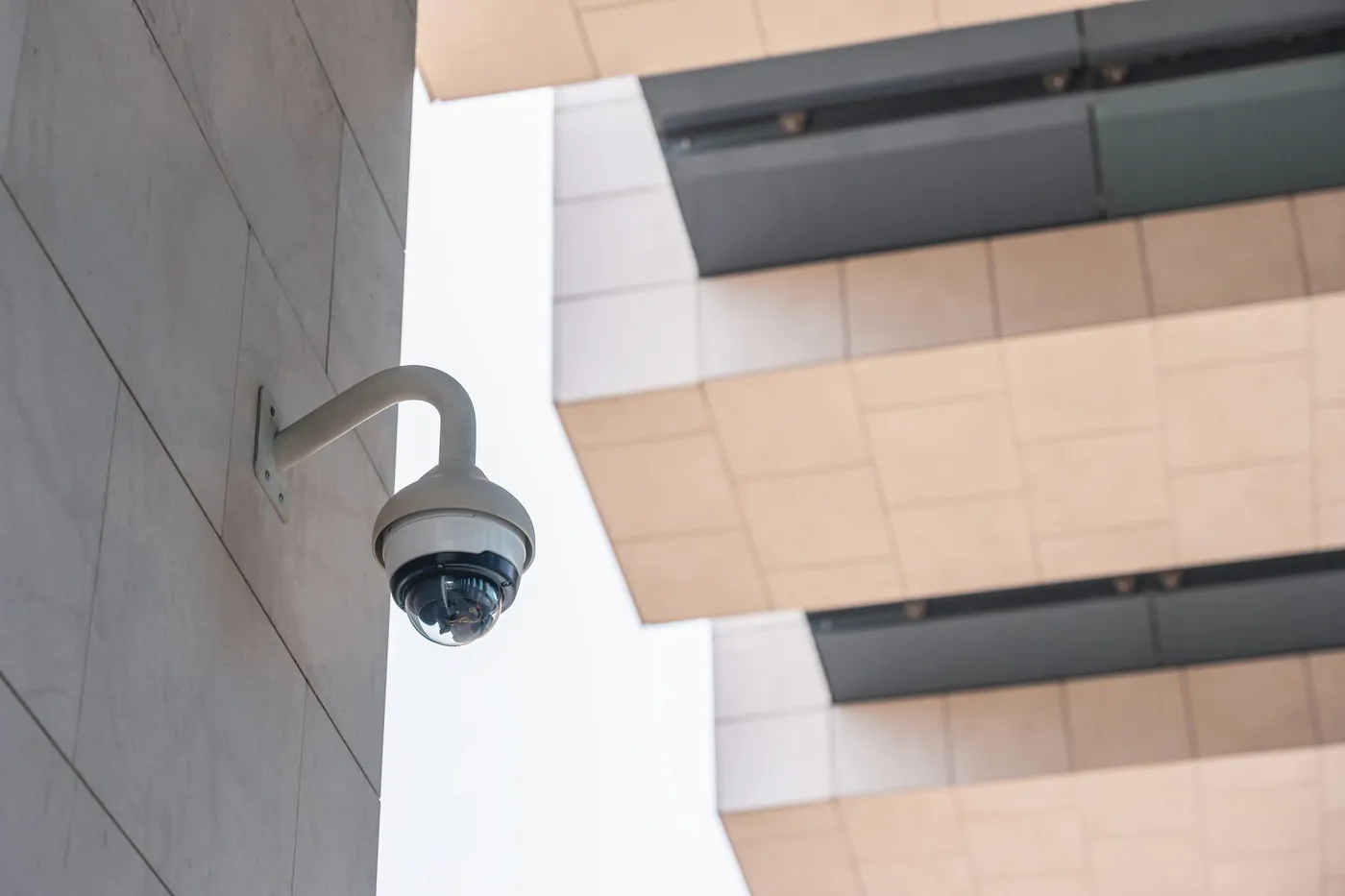
Campus Security for Private Schools in DFW: Fire, Access, and Texas Compliance in One Scope
Integrated campus security for private K-12 schools and independent colleges in DFW, covering Texas SB 11 visitor management, NFPA 72 fire alarm compliance, access control, and emergency notification.
Texas SB 11 requires visitor management on every Texas school campus, but private schools often implement it without the safety coordinator resources a public district provides. I help independent K-12 schools and private colleges in DFW design and install the systems: visitor management, fire alarm, access control, and emergency notification, all in a single scoped engagement that satisfies Texas compliance requirements and protects campus without a capital budget fight.
Private school security systems in Dallas and the broader DFW area must satisfy both Texas SB 11 visitor management requirements and NFPA 72 fire alarm standards before campus opens each year. The compliance obligations apply whether the school serves 200 students in Plano or 1,200 students across a multi-building campus in Fort Worth. What changes is the complexity of execution: more buildings, more entry points, and more systems that must work together when an alert fires.
I design campus security systems for private K-12 and independent colleges in DFW that address controlled access, visitor management, and emergency notification in a single integrated scope. With 17 years in commercial fire and security, I’ve worked the operational side long enough to know which systems create real safety and which ones create the appearance of it. My work on this type of campus is never template-driven. Every independent school has a different physical footprint, a different accreditation body, and a different board tolerance for CapEx.
Who This Page Is For (and Who It Is Not)
This page is written for independent K-12 schools, parochial schools, Montessori campuses, charter schools operating under independent governance, and private colleges and universities in the DFW metroplex. What these schools share: tuition-based enrollment, independent facilities management, and a compliance process that falls to the head of school or facilities director rather than to a dedicated public-district safety team.
If your campus operates under an ISD (Richardson ISD, Frisco ISD, Dallas ISD, Fort Worth ISD, and similar public districts), this page is not for you. Public school procurement runs through competitive bid requirements, government purchasing cooperatives, and TEA-mandated safety timelines that require a completely different engagement. A separate conversation would apply.
The distinction matters beyond procurement. Private schools select vendors on trust, scope, and relationship. Administrators here carry compliance responsibility alongside enrollment planning, accreditation prep, and curriculum oversight simultaneously. They need a partner who already understands that context, not a vendor who learned it halfway through the first conversation.
Texas SB 11 and Visitor Management for Private Schools
Texas SB 11 (part of the Texas School Safety Act revisions) requires schools to verify visitor identities and screen against sex offender registries before allowing access to campus. That requirement applies to private schools, not only to public ISDs, but private schools often find themselves working through the implementation process without the infrastructure a public district’s safety coordinator provides.
Many private school campuses currently handle this with a clipboard or a basic sign-in sheet. That approach creates measurable liability exposure: if a visitor with a criminal history accesses campus and the visit was not logged or screened, the documentation gap becomes the problem. Courts and accrediting bodies both look at whether the school had a documented process, not just a good-faith intention.
A proper visitor management system does several things the clipboard cannot. It scans a government-issued ID, checks the visitor’s name against sex offender databases in real time, prints a time-stamped badge, and generates a check-out log that is available for audit. Visitor management connects directly to the broader campus access control system. I design and install visitor management systems that integrate with controlled entry points, so a check-in at the front desk is tied to the same badge system that controls who can enter which campus zone.
The accreditation angle is real. Independent school accreditors, including bodies like SAIS and NAES, increasingly expect documented visitor management protocols as part of safety reviews. A technology system provides the audit trail that a paper log cannot reliably produce. For private schools approaching accreditation cycles, this is a practical deliverable, not just a compliance checkbox.
Campus Fire and Life Safety: Multi-Building Compliance
Private school campuses rarely fit the single-building model that most commercial fire alarm scopes assume. A typical independent campus in Frisco or McKinney might include a main academic building, a gym, a chapel, portable classrooms, administrative offices, and storage outbuildings. Each occupied structure falls under Texas fire code, and the compliance picture across all of them has to be coordinated.
Texas adopts NFPA 72 through the Texas State Fire Marshal’s Office plan review process. Under NFPA 72, private schools are classified as educational occupancies, which specifies requirements for notification appliance placement, detection coverage, and the inspection cycle. Multi-building campuses may require either independent fire alarm panels in each building or a networked system where a coordinator panel monitors all buildings from a central point. The networked approach is generally the right answer for campuses with more than two or three structures, because it allows a single point of response when an alarm activates anywhere on campus.
The inspection obligation is a compliance requirement, not optional maintenance. Annual inspection and testing is the NFPA 72 baseline for most educational fire alarm systems. Private schools that defer inspection create documentation gaps that can affect both insurance coverage and accreditation standing. My fire alarm inspection service covers the full NFPA 72 inspection cycle, from pull station tests to notification appliance verification, and produces the documentation your accreditor expects.
What I often find on private school campuses: the fire alarm system was installed when the original building opened, additions were built over the years without integrating into the original system, and the current configuration no longer reflects what the Texas State Fire Marshal would approve for a new installation. Sorting that out early, before an inspection or accreditation visit, is almost always less expensive than sorting it out under pressure.
Access Control and Lockdown Readiness
Controlled entry starts at the perimeter and extends through every access point that separates the public from students. For a private school campus, that typically includes the main campus entry, athletic facility entries, administrative areas, and sensitive interior zones such as server rooms, nurse’s offices, and pharmacy-adjacent storage. Card, fob, or mobile credential access at each of these points creates an auditable access record and removes the reliance on physical key management, which is a chronic vulnerability on campuses with high staff turnover.
Modern access control systems tie directly into lockdown protocols. When a threat is identified, one command from the front desk or from a mobile device puts every exterior door into locked-down mode. The head of school does not need to radio individual buildings. The entire campus secures in seconds, not minutes. That outcome matters to a parent imagining a crisis at their child’s school, and it matters to a board evaluating the school’s safety posture during enrollment conversations.
Texas has advanced legislation related to silent panic alert technology in schools, drawing from the framework of Alyssa’s Law, which was named for a victim of the Parkland shooting. Texas has made legislative movement in this area, and while private schools should verify current mandated applicability for their specific institution type, many heads of school are already installing silent panic alert systems proactively given the liability and accreditation context. A staff wearable or desktop button that silently alerts 911 and campus administrators simultaneously changes the response timeline for any on-campus incident.
Texas Education Code Chapter 37 establishes school safety codes that originated in the public school context, but private school accreditors and insurers increasingly expect equivalent standards. The practical effect: a private school that benchmarks its safety program against Chapter 37 requirements, even where it is not directly required to comply, is in a stronger position with both auditors and underwriters.
Surveillance with Student Privacy in Mind
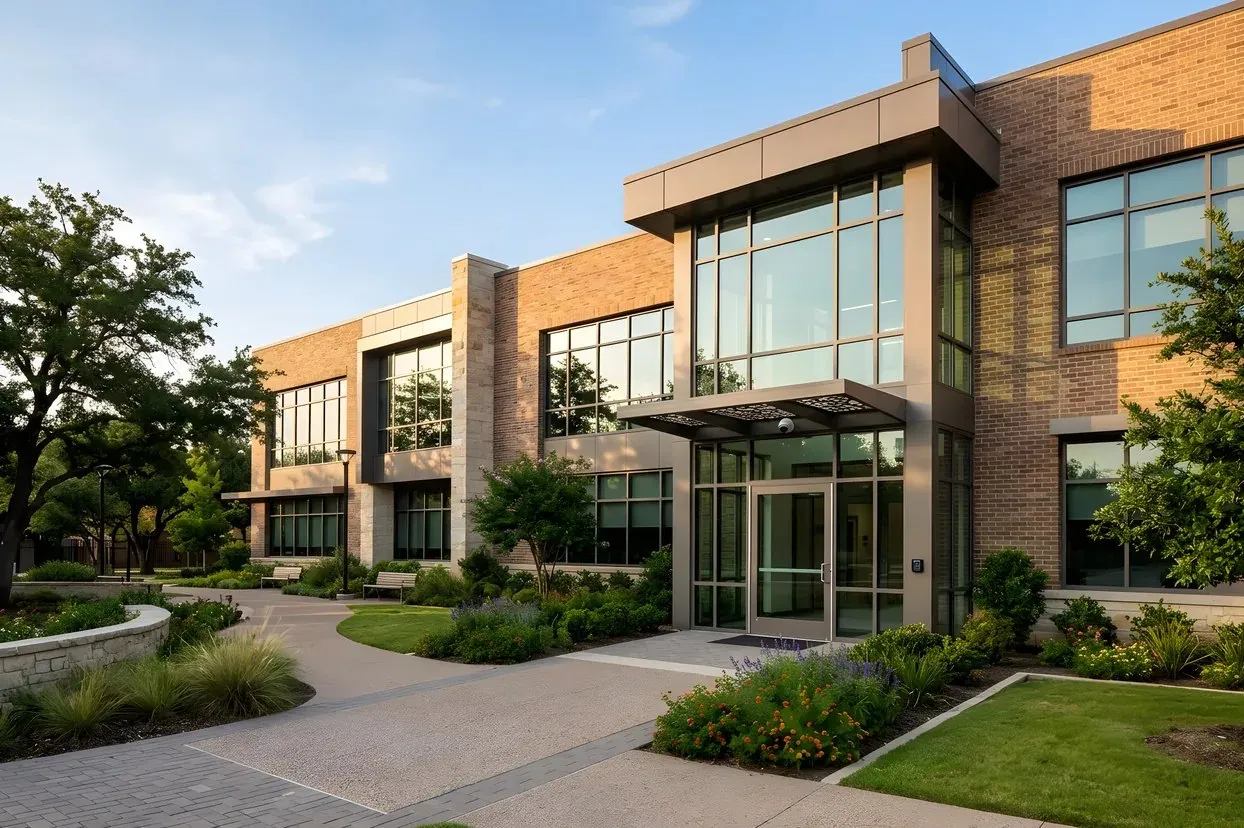
The Family Educational Rights and Privacy Act (FERPA) governs student education records, and its implications for camera systems in educational settings are worth discussing before a camera layout is finalized. FERPA does not directly prohibit surveillance cameras, but footage captured in classrooms may be considered an education record under some interpretations, which affects how it can be stored, accessed, and shared. I design systems with those questions already on the table.
In practice, this shapes placement decisions. Cameras in hallways, entry points, parking lots, and athletic fields follow standard commercial practice and carry minimal FERPA complexity. Cameras in classrooms require a deliberate policy decision, and I typically recommend that the school’s legal counsel weigh in before the layout is finalized. A well-designed system also includes role-based access controls: who can pull footage, how long it is retained, and what the request process looks like for a principal versus front-desk staff versus facilities management.
Parents who chose private school did so partly for the environment their children would be in. A surveillance approach that feels institutional or invasive works against that decision. My consultative process surfaces this concern early, not as an obstacle, but as a design parameter that produces a better-calibrated system.
Mass Notification and Emergency Communications
Many private school campuses have an intercom system that was installed when the main building opened and has never been meaningfully updated. That system handles morning announcements. It was not designed for modern lockdown protocols, and it cannot meet NFPA 72 emergency communication requirements for a multi-building campus. Replacing or upgrading it is not an IT project; it is a life safety project.
Mass notification on a modern campus means audio, visual, and optionally text or app-based alerts that reach every occupied space simultaneously. This is distinct from the fire alarm’s notification appliances, which handle evacuation tones for detected smoke or heat. A campus emergency notification system governs communications across event types: fire evacuation routes through one audio sequence, lockdown through a different tone sequence and door control, parent notification through an outbound message system, and coordination with first responders through the same integrated platform.
NFPA 72 Chapter 24 governs mass notification systems for educational and other occupancies. The mass notification layer on a modern campus is a technology integration project as much as a security project. I handle the full scope: structured cabling, intercom and PA system replacement or upgrade, integration with the fire alarm panel, and the emergency communications system that ties it together. A campus where fire alarm, access control, and mass notification all respond to the same incident trigger is a fundamentally different safety posture than one where each system operates independently.
Subscription-Based Ownership for Private School Budgets
Taking a full fire alarm, access control, and visitor management scope to a school board for a capital approval of $150,000 to $300,000 is typically a six-to-twelve month process. It requires a budget cycle alignment, a facilities committee review, and a board vote, and it is frequently deferred when enrollment projections or deferred maintenance compete for the same capital pool. Private schools do not have procurement officers. The head of school or business manager carries this decision alongside everything else on their plate.
Subscription-based campus security converts the entire scope into a monthly operating expense. Equipment, installation, 24/7 UL-listed central station monitoring, annual inspection, software updates, and a local account manager who knows the campus are all included in the monthly fee. The board line item is predictable. The system is current-generation. And the school does not need to budget separately for the inspection cycle or manage a service contract renewal every few years.
For private schools that cannot or would rather not carry equipment and monitoring costs as capital expenditures, subscription-based campus security converts the entire scope into a predictable monthly line item. The enrollment angle is worth naming directly: a well-documented, modern campus security program is a factor in prospective family conversations. Parents of incoming students ask about it during tours. Independent school accreditors evaluate it as part of the safety review. A subscription model lets the school have the system in place before the next capital campaign, not after it.
| CapEx Model | Subscription Model | |
|---|---|---|
| Upfront equipment cost | Full cost at project close | Included in monthly fee |
| Installation | Separate line item | Included |
| 24/7 UL monitoring | Separate contract | Included |
| Annual inspection | Separate contract | Included |
| Software updates | Purchased per cycle | Included |
| Board capital approval needed | Yes | No |
Frequently Asked Questions
Q: Does Texas SB 11 apply to private schools, or only public schools?
A: Texas SB 11 applies broadly to Texas schools and establishes visitor management requirements that private schools are expected to meet. Private schools operate under different enforcement mechanisms than public ISDs, which have dedicated safety coordinators and TEA oversight structures. For a private school, the implementation typically falls on the head of school or facilities director, without a district-level safety infrastructure to lean on. That gap in support is real, and it is one of the reasons the compliance process often goes unaddressed until an accreditation review forces the issue.
Q: What fire alarm code applies to private schools in Texas?
A: Texas follows NFPA 72 through the Texas State Fire Marshal’s Office plan review process. Private schools are classified as educational occupancies under NFPA 72, which specifies notification appliance placement, detection coverage requirements, and inspection frequency. Multi-building campuses may require a networked fire alarm system with a coordinator panel, rather than independent systems in each building that cannot communicate with each other. Annual inspection and testing are required for compliance.
Q: How does a visitor management system work for a private school?
A: A visitor management system scans a government-issued ID, checks the visitor’s name against sex offender registries in real time, prints a time-stamped badge, and logs the visit with both check-in and check-out records. That log is available for audit by accreditors, insurers, or administrators at any point. Many systems also integrate with the campus access control infrastructure, so a badged visitor is limited to specific campus zones rather than having unrestricted access once they pass the front desk.
Q: What is Alyssa’s Law and does it apply to private schools in Texas?
A: Alyssa’s Law is named after a victim of the 2018 Parkland school shooting and requires silent panic alert technology that allows staff to alert 911 and campus administrators simultaneously without a visible or audible action. Texas has made legislative movement in this area, and private schools should verify current mandated applicability for their specific institution type with their legal counsel. Even where the mandate has not yet reached private schools specifically, many heads of school are installing panic alert systems now, ahead of the requirement, because the liability and accreditation expectations are already moving in that direction.
Q: How much does a private school security system cost in DFW?
A: Campus security systems for private schools vary significantly based on the number of buildings, current infrastructure condition, the services included, and whether the school is starting from scratch or upgrading existing equipment. I offer a no-cost campus assessment before quoting anything. That walk-through gives us an accurate picture of what is already in place, what the compliance gaps are, and what a realistic scope looks like for the campus as it actually exists. A subscription-based approach also changes the cost structure entirely: instead of a large upfront figure, the school carries a predictable monthly operating expense.
Q: Can a private school in DFW get a fire alarm and access control system without a large upfront capital expense?
A: Yes. A subscription-based model covers equipment, installation, monitoring, annual inspection, and maintenance in a monthly fee that does not require capital budget approval. For a school that has already received a large upfront quote from another provider and is waiting on a board cycle to approve it, this model typically means the system can be in place within weeks rather than waiting for the next budget year.
Q: What is the difference between a fire alarm system and a mass notification system for a school campus?
A: Fire alarm systems handle life safety detection and evacuation: smoke detectors, heat detectors, pull stations, horns, and strobes. They activate on a detected fire event and route occupants out of the building. Mass notification systems handle emergency communications: campus-wide announcements, lockdown alerts, parent notifications, and first-responder coordination. They activate across a range of event types, not only fire. The two systems work together on a modern integrated campus, but they are not the same system. Many campuses need both, and a campus that has only one in place has a significant gap.
Ready to Assess Your Campus?
I offer a no-cost campus security assessment for private schools in DFW. We walk the site, review your current systems, and identify compliance gaps against Texas SB 11, NFPA 72, and your accreditation requirements. No quote until we know what the campus actually needs.
If you work with Spanish-speaking facilities staff or parent populations, I work in English and Spanish, whichever is more comfortable for your team.
Call me at (510) 305-5522 or request a campus assessment online. The assessment costs you an hour. The conversation usually saves you from a more expensive problem later.
Relevant Services
- Fire Alarm & Life Safety
Code-compliant fire alarm systems, mass notification, central station monitoring, and first-responder DAS for DFW commercial properties.
- Security & Access Control
Access control systems, video surveillance, intrusion detection, and visitor management: layered protection designed for your facility.
- Technology Integration
Audiovisual systems, IT infrastructure, healthcare nurse call, critical communications, and managed cybersecurity, unified under one account executive.
- Managed Services & Subscription
Trade capital expenditure for a predictable monthly fee. Full coverage for fire, security, and tech systems. No large upfront investment required.