Commercial Service

Commercial Fire Alarm Systems and Life Safety Services in DFW

Fire alarm design, installation, NFPA 72 inspections, mass notification, DAS/BDA, and UL-listed monitoring for DFW commercial facilities. 17 years in fire and life safety.

I work with DFW commercial facilities on fire alarm and life safety from the first site survey through every annual inspection and monitoring renewal. My scope covers six sub-services: fire alarm system design and installation, mass notification systems, fire alarm test and inspect services, first responder DAS and BDA coverage, UL-listed central station monitoring, and internet and cellular monitoring.

NFPA 72, the National Fire Alarm and Signaling Code, is the adopted standard in Texas for commercial fire alarm systems. The Texas State Fire Marshal’s office enforces it statewide, and incorporated DFW cities apply it through their local fire marshal offices.

I serve manufacturing plants, multi-tenant commercial buildings, and private schools across the DFW metroplex. My background includes 17 years in fire and life safety, nine of those running service delivery operations for 350 or more commercial customers before I moved into a consultative sales role. Monitoring and inspection are distinct services with different schedules and different purposes: inspection confirms every device works, monitoring ensures someone responds when the system activates.

To start a conversation about your fire alarm system, call me at (510) 305-5522 or use the contact form.


Fire Alarm System Design and Installation

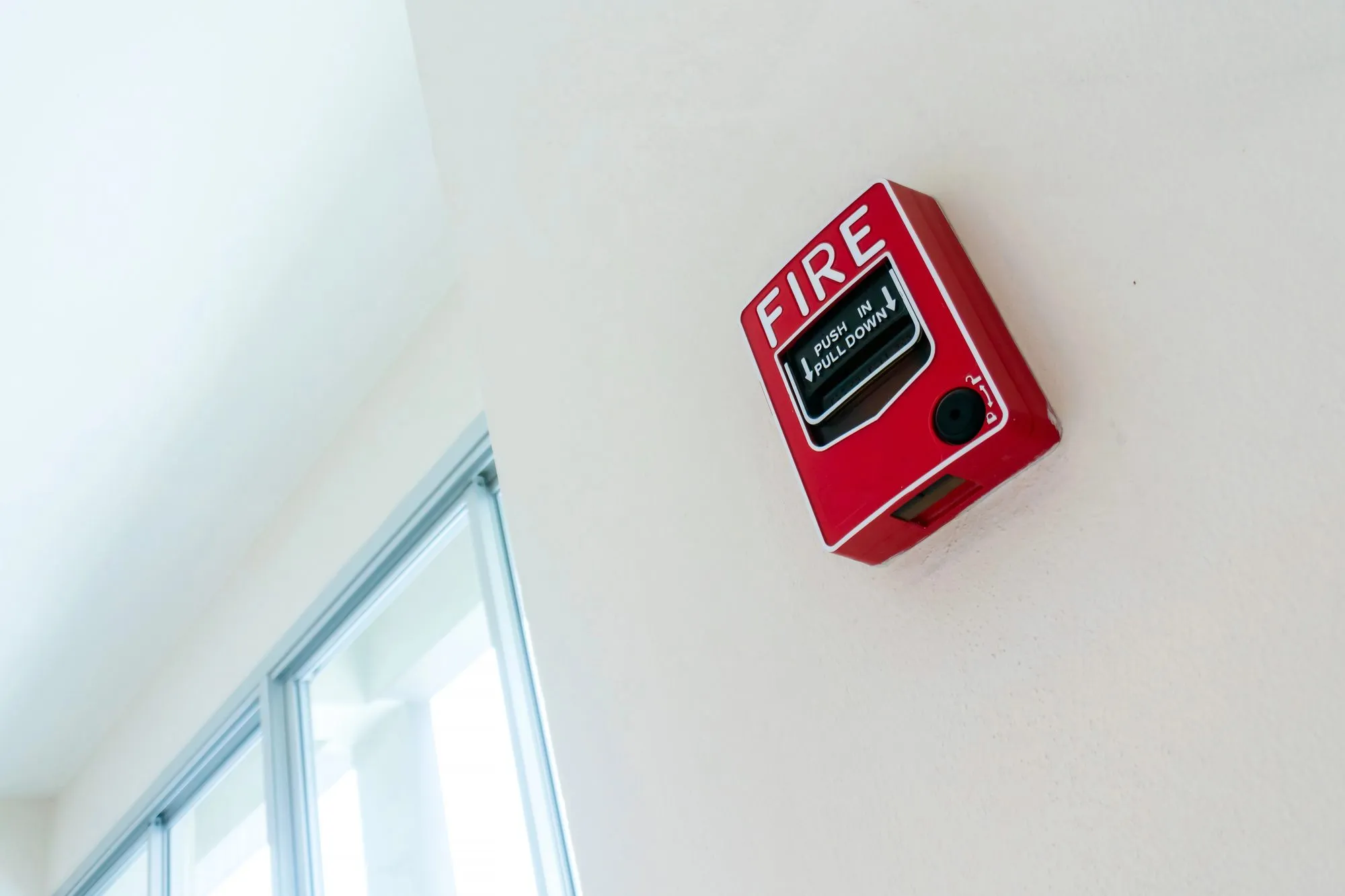
A code-compliant commercial fire alarm system starts with a design that accounts for occupancy classification, square footage, building construction type, and the authority having jurisdiction’s (AHJ) local amendments. When I scope a system for a DFW manufacturing facility or multi-tenant office building, I begin with a site survey to map device placement: smoke detectors, heat detectors, duct detectors, manual pull stations, horn and strobe notification appliances, and the fire alarm control panel that ties the system together. Device spacing is not a guess; NFPA 72 specifies detection coverage requirements, and a system designed without that reference fails inspection.

The International Building Code (IBC), as adopted in Texas, sets which commercial buildings require a fire alarm system and what triggers a new installation requirement. New construction, a change of occupancy, and renovations that add floor area can all require a fire alarm upgrade under the IBC. Understanding where your building sits in that framework is part of the initial conversation.

Installation requires licensed technicians, permitted work, and an AHJ submission before final inspection. In DFW commercial projects, the AHJ is typically the local fire marshal’s office for the city where the building sits. I coordinate the permit process and the AHJ submission so the project closes with a complete compliance record, not an open inspection item.


Mass Notification Systems

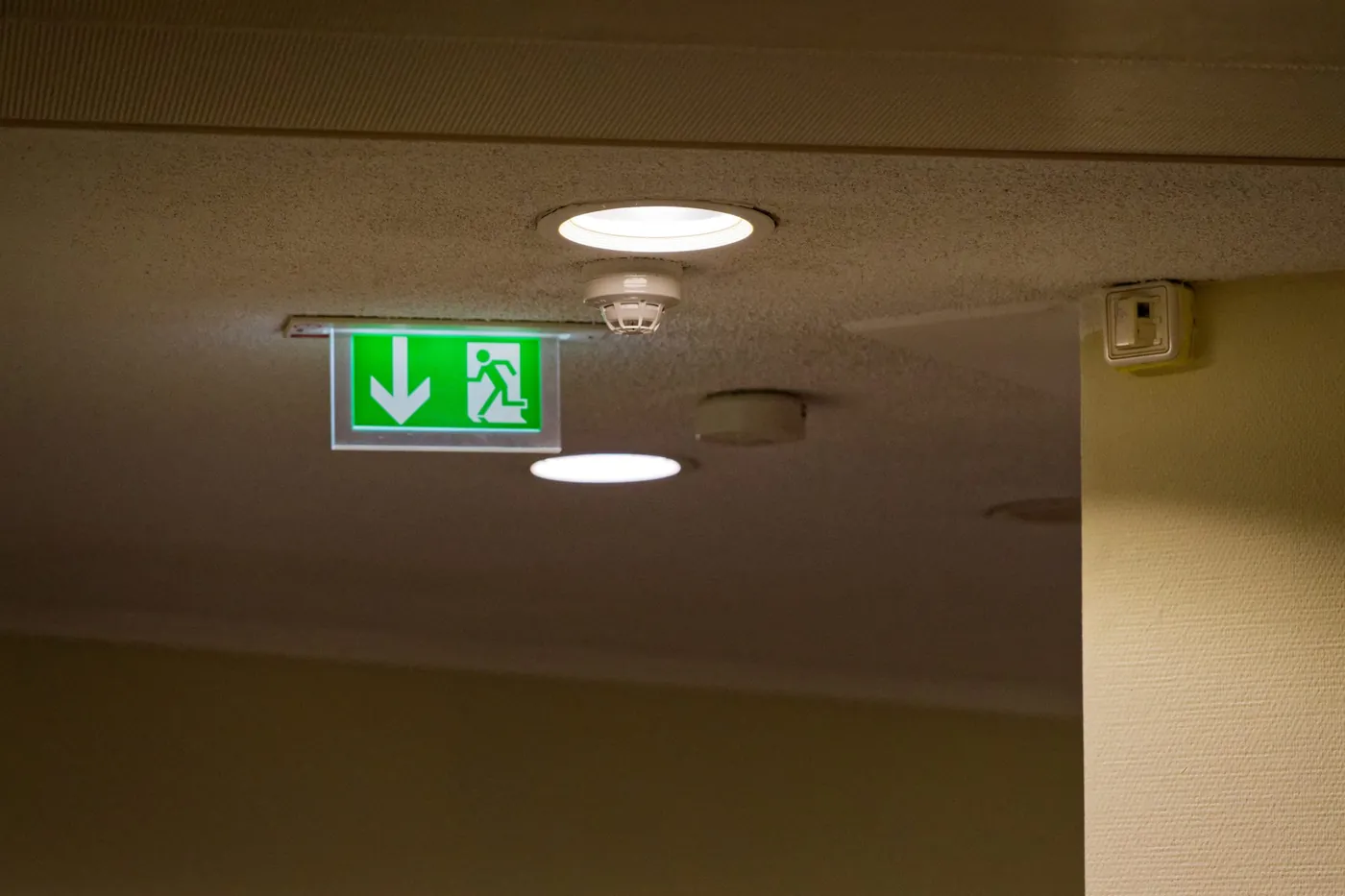
A mass notification system communicates emergency information to building occupants beyond the standard fire alarm tone. NFPA 72, Chapter 24, added mass notification to the code umbrella in the 2010 edition, covering voice messaging, visual alert strobes, digital signage integration, and in some deployments, text and email notification to mobile devices. A mass notification system and a fire alarm system are related but distinct: the fire alarm detects and signals, the mass notification system tells people what to do and where to go.

Mass notification is most critical in environments where a tone-only alert is not enough. For DFW private schools, a campus-wide mass notification system handles both fire evacuation and lockdown communication. For large commercial buildings with multiple stairwells and floors, voice messaging from a central amplifier directs occupants to specific exits. For manufacturing facilities with high ambient noise levels, strobe-only or voice-capable notification is often the only way to reach workers on the production floor.

Many DFW commercial buildings installed their fire alarm systems before the current NFPA 72 Chapter 24 mass notification requirements took effect. I assess whether the current system covers the requirement or whether a separate mass notification layer needs to be added. If you are in a building constructed before 2015, there is a reasonable chance the original system predates the current code requirement for your occupancy type.


Fire Alarm Test and Inspect Services (NFPA 72 Compliance)

NFPA 72 requires annual inspection for most commercial fire alarm system components. Some components require semi-annual testing: battery backup systems, certain detector types, and specific initiating devices fall into more frequent intervals depending on device specification and occupancy classification. Texas follows NFPA 72 as the adopted standard, and the Texas State Fire Marshal’s office sets the enforcement framework statewide.

A licensed fire alarm company or licensed fire alarm technician must perform the inspection. The Texas State Fire Marshal’s office issues fire alarm company licenses under TAC Title 34, Part 1, Chapter 3, Subchapter K. Using an unlicensed provider does not produce a valid inspection record, which puts the facility out of compliance and creates liability exposure. The inspection report must document every device tested and the outcome for each device; it is a compliance record that facilities managers should retain and have available for the next fire marshal review.

A complete NFPA 72-compliant inspection covers initiating devices (smoke detectors, heat detectors, pull stations), notification appliances (horns, strobes, speakers), the fire alarm control panel, battery backup systems, and the monitoring connection to the central station. Dallas and Fort Worth local fire marshals reference NFPA 72 in their annual business inspection requirements. A failed inspection triggers a re-test requirement and, depending on the deficiency and the local fire marshal’s response, can create an occupancy risk. I schedule and coordinate test and inspect services for DFW facilities, produce the compliant inspection report, and track any re-test requirements so nothing stays open past its deadline.


First Responder DAS, BDA, and ARCS

A DAS (Distributed Antenna System) paired with a BDA (Bi-Directional Amplifier) extends public safety radio frequency coverage inside a building so police, fire, and emergency medical personnel can communicate without signal dead zones during an emergency. Without this coverage, a fire department entering a large commercial building may lose radio contact with command the moment they move away from the building perimeter. That communication gap creates a direct life-safety risk during active emergency response.

International Fire Code (IFC) Section 510 and local DFW amendments require in-building public safety communication coverage systems in buildings above specific occupancy thresholds and square footages. Many DFW commercial buildings constructed before local adoption of IFC 510 are now required to add BDA coverage when they pull renovation permits or undergo re-inspection by the local fire marshal. The requirement catches facilities managers off guard because it is not triggered by a fire alarm deficiency; it is a separate code obligation that surfaces during inspection.

ARCS (Automated Remote Control System) is the control component that interfaces with the fire alarm system and the BDA installation. When the fire alarm activates, the ARCS system ensures first responder coverage priorities are configured correctly so the radio system functions as designed during the emergency. I specify and coordinate DAS/BDA/ARCS installations as part of a full fire and life safety scope for DFW facilities. When I scope a fire alarm project for a building above the IFC 510 threshold, I identify the BDA requirement at the design stage rather than after a failed inspection, which saves the facility a re-inspection cycle and a compressed installation timeline under enforcement pressure.


UL-Listed Central Station Monitoring

UL-listed central station monitoring means the monitoring facility has been evaluated and certified by Underwriters Laboratories against UL 827, the standard for central station alarm systems. UL 827 defines requirements for redundancy, operator training, response times, backup power, and equipment standards. A monitoring station that carries UL-listed status has demonstrated compliance with those requirements through UL’s evaluation process. “UL-listed” is a verifiable credential, not a marketing phrase, and it is the right question to ask any monitoring provider before signing a monitoring agreement.

A UL-listed central station receives alarm signals from the fire alarm system 24 hours a day and dispatches emergency services when a signal is received. The monitoring is not dependent on a property manager being available, awake, or reachable. When the fire alarm panel sends a signal, the central station handles the dispatch protocol.

Many commercial property insurance carriers require UL-listed central station monitoring as a condition of coverage or as a factor in premium calculation. The NFPA 72 monitoring requirements and local DFW fire code reference verified monitoring as the compliant path. A facility that routes its alarm signals to an unverified monitoring provider may meet the technical connection requirement while missing the UL-listed standard that insurers and inspectors look for. I connect DFW commercial fire alarm systems to UL-listed central station monitoring as part of a full life safety scope.


Internet and Cellular Monitoring

Internet monitoring and cellular monitoring are the communication paths from the fire alarm control panel to the central station. Instead of a POTS (plain old telephone service) line, the fire alarm communicator sends alarm signals over an IP network or a cellular network. These are two distinct technology paths, and the choice between them is a separate decision from the quality of monitoring at the destination.

The key distinction from UL-listed central station monitoring: internet and cellular describe how the signal travels, not who receives it. Both paths can route to a UL-listed central station; confirming that the monitoring destination is UL-listed matters regardless of which communication technology carries the signal. Cellular monitoring is particularly appropriate for buildings in areas with unreliable broadband, older buildings without structured cabling for IP communicators, and as a redundancy path alongside an internet monitoring connection.

The FCC’s ongoing POTS sunset is accelerating the transition to IP and cellular communicators across DFW commercial buildings. Facilities with older fire alarm systems may not realize their monitoring connection runs over phone line infrastructure that is approaching end of service life. I help DFW facilities evaluate the right communicator path and verify that the monitoring destination is UL-listed.

Monitoring PathHow Signal TravelsBest Fit
Central Station via POTSTraditional phone lineOlder systems with existing POTS infrastructure
Central Station via Internet/IPIP network connectionStandard for new installations; reliable broadband required
Central Station via CellularCellular networkPoor broadband areas; redundancy alongside IP path

Fire Alarm Compliance Requirements for DFW Commercial Buildings

NFPA 72, the National Fire Alarm and Signaling Code, is the governing standard for commercial fire alarm system design, equipment, installation, testing, inspection, and monitoring in Texas. The Texas State Fire Marshal’s office (SFMO) governs fire alarm company licensing and sets the enforcement framework for facilities in unincorporated areas. Incorporated DFW cities, including Dallas, Fort Worth, Frisco, Plano, and Irving, apply NFPA 72 through their local fire marshal offices, sometimes with amendments that add requirements beyond the state baseline.

Annual inspection is the NFPA 72 baseline for most commercial fire alarm components. The specific interval depends on device type and occupancy classification; battery backup systems and certain detector types require semi-annual testing rather than annual. Every inspection must be performed by a licensed fire alarm company, must cover every device in the system, and must produce a documented inspection report. That report is the compliance record: it shows what was tested, who performed the test, and the outcome for each device. Retain it.

A change of occupancy, a renovation that adds floor area, or a change in building use can trigger a new fire alarm installation requirement under the IBC and the AHJ’s local interpretation. A warehouse converting to an office, a single-tenant building dividing into a multi-tenant configuration, or a school adding an enrollment wing can all require a new or upgraded system. Identifying those triggers at the scoping stage is part of what I do before any design work begins.

A common question is what a commercial fire alarm system costs per square foot. The honest answer is that the figure varies too much without a site visit to be a reliable starting point. Variables include building type, occupancy classification, existing infrastructure, the number and type of devices code requires for that occupancy, whether mass notification or DAS/BDA is required, and the monitoring tier. A straightforward office space requiring a conventional panel, detectors, and pull stations is priced differently than an industrial facility with duct detectors, suppression system interfaces, mass notification requirements, and a BDA installation. The site visit is where a scope-specific estimate begins.
Industries I Serve in DFW

Manufacturing and industrial facilities across DFW face fire alarm complexity that single-tenant commercial buildings do not. Occupancy classifications for industrial storage and production environments affect device spacing, detection technology selection, and in some cases require suppression system interfaces tied to the fire alarm control panel. OSHA requirements overlap with fire code in manufacturing environments in ways that create compliance questions the fire alarm system has to address alongside the life safety requirement. I work with manufacturing operations on fire alarm and life safety for the full scope of that complexity.

For my commercial real estate and property management clients in DFW, the fire alarm question splits between base building responsibility and tenant build-out coordination. Multi-tenant buildings in DFW’s office and mixed-use corridors carry fire alarm compliance obligations for common areas and the base building system at the landlord level, while tenant renovations need to integrate with that base system without creating compliance gaps. I help property managers identify those gaps before they surface during a fire marshal inspection.

Private and independent schools in DFW carry fire alarm compliance requirements from both the Texas State Fire Marshal and the Texas Education Agency. Mass notification systems are increasingly required alongside the base fire alarm for schools above certain enrollment thresholds, and campus-wide coverage across multiple buildings adds complexity beyond what a single-building commercial property requires. I work with school facilities directors on the full fire alarm and life safety scope, including the mass notification layer where the code requires it.


I serve DFW commercial facilities as an Account Executive at Pavion (SDM Systems Integrator of the Year, SCN Top 50, 70 or more US locations). That backing means your system is designed, installed, and serviced by a team with national resources and local DFW accountability. My 17 years in fire and life safety include nine years running service delivery for 350 or more commercial customers, a $7.2M record revenue year, and maintenance contract closures up to $500K. I have been inside the compliance problem at every stage of the system lifecycle, before and after the sale.


Frequently Asked Questions About Commercial Fire Alarm Systems in DFW

How often does a commercial fire alarm system need to be inspected in Texas?

Texas commercial fire alarm systems must be inspected annually under NFPA 72, the adopted standard statewide. Some components, including battery backup systems and certain detector types, require semi-annual testing. The inspection must be performed by a licensed fire alarm company. The Texas State Fire Marshal’s office issues those licenses and enforces the standard for unincorporated areas; incorporated DFW cities like Dallas, Fort Worth, and Frisco apply NFPA 72 through their local fire marshal offices, sometimes with local amendments that add requirements beyond the state baseline.

What is the difference between fire alarm monitoring and fire alarm inspection?

Inspection is a periodic, document-producing compliance test conducted by a licensed technician. It confirms that every device in the system functions correctly and produces a report that becomes the facility’s compliance record. Monitoring is an always-on service where a central station receives signals from the fire alarm system 24 hours a day and dispatches emergency services when a signal is received. A commercial building needs both: inspection confirms the system works, and monitoring ensures someone responds when it activates. They operate on different schedules and serve different functions.

How much does a commercial fire alarm system cost per square foot in DFW?

Commercial fire alarm system cost depends on building type, occupancy classification, existing infrastructure, the number and type of devices required by code, and the monitoring tier. A simple office space requiring a conventional panel with detectors and pull stations is priced differently than an industrial facility with duct detectors, suppression system interfaces, and mass notification requirements. Publishing a per-square-foot figure without a site visit would produce a number that does not apply to your specific building. I scope each system from a site visit; that conversation is where any reliable estimate begins.

Who can inspect a fire alarm system in Texas?

In Texas, a fire alarm system inspection must be performed by a licensed fire alarm company or licensed fire alarm technician. Licenses are issued by the Texas State Fire Marshal’s office under TAC Title 34. An unlicensed provider cannot produce a valid inspection record, which puts the facility out of compliance regardless of how thorough the physical walk-through was. The inspection report must document every device tested and the result. That documentation is a compliance record retained for the next inspection cycle, not an informal summary.

What is a BDA, and does my DFW commercial building need one?

A BDA (Bi-Directional Amplifier) extends public safety radio frequency coverage inside a building so police, fire, and EMS personnel can communicate without signal dead zones during an emergency. International Fire Code (IFC) Section 510 and local DFW amendments require in-building coverage systems in buildings above specific occupancy thresholds. Many DFW buildings constructed before local adoption of IFC 510 are now required to add BDA coverage when they pull renovation permits or undergo fire marshal re-inspection. The BDA requirement is separate from the fire alarm system but is frequently coordinated with a fire alarm project because both involve the same AHJ submission and inspection process.

Can I combine my fire alarm monitoring and security system monitoring into one subscription?

Yes. A managed services agreement can bundle fire alarm monitoring, access control monitoring, and video surveillance under a single recurring subscription. This simplifies vendor management and often improves response coordination because the central station handles all signal types from a unified monitoring relationship. I work with DFW facilities to structure monitoring agreements that cover the full physical security and life safety scope under one contract, with UL-listed monitoring confirmed across fire and security systems.


Start with a Conversation About Your Fire Alarm System

A conversation about your fire alarm system covers what you have, where it stands against current NFPA 72 requirements, whether your monitoring is UL-listed and on the right communication path, and whether any retrofit needs such as DAS/BDA coverage or a mass notification layer are on the horizon. There is no proposal until I understand the scope.

Call me at (510) 305-5522 or submit the contact form to start. I serve Spanish-speaking commercial clients throughout DFW in their preferred language.