Commercial Security Consulting in McKinney

Security consulting for McKinney commercial buildings: access control, video surveillance, fire and life safety, and permit coordination for industrial, flex, and downtown retrofit projects.

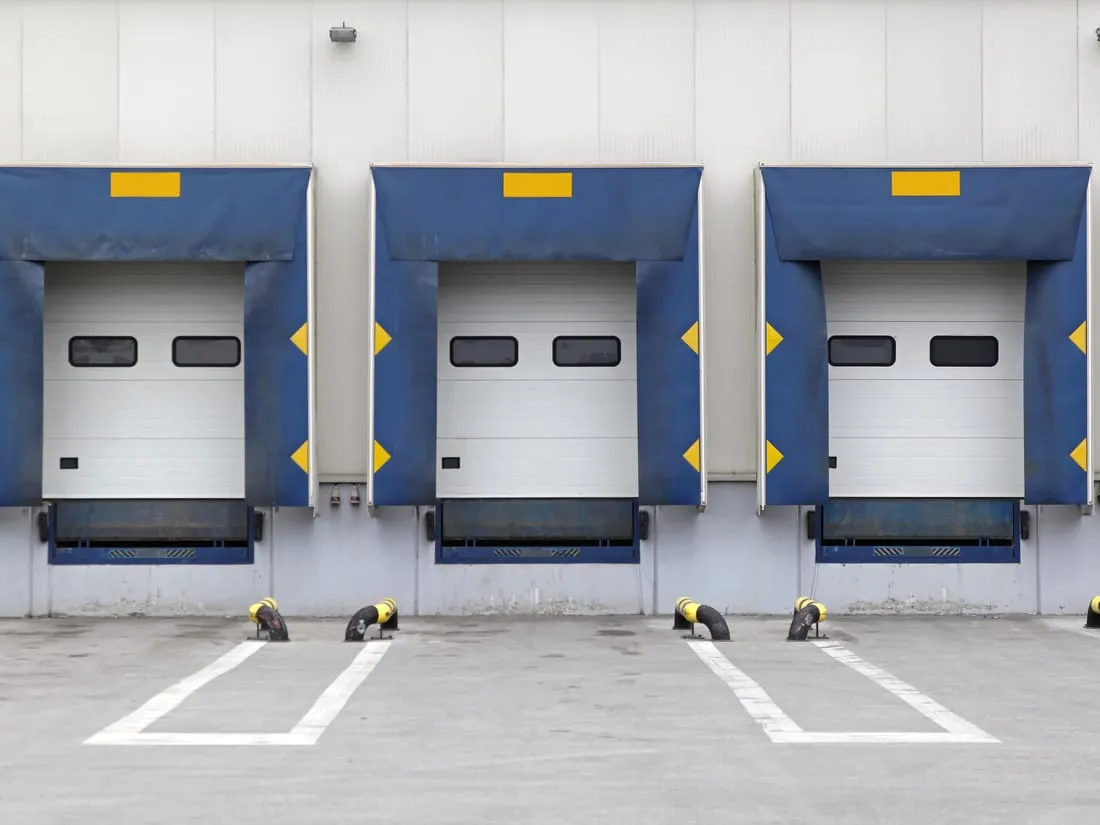
Warehouse and distribution facility loading docks in the Dallas-Fort Worth metroplex

What I Do for Commercial Buildings in McKinney

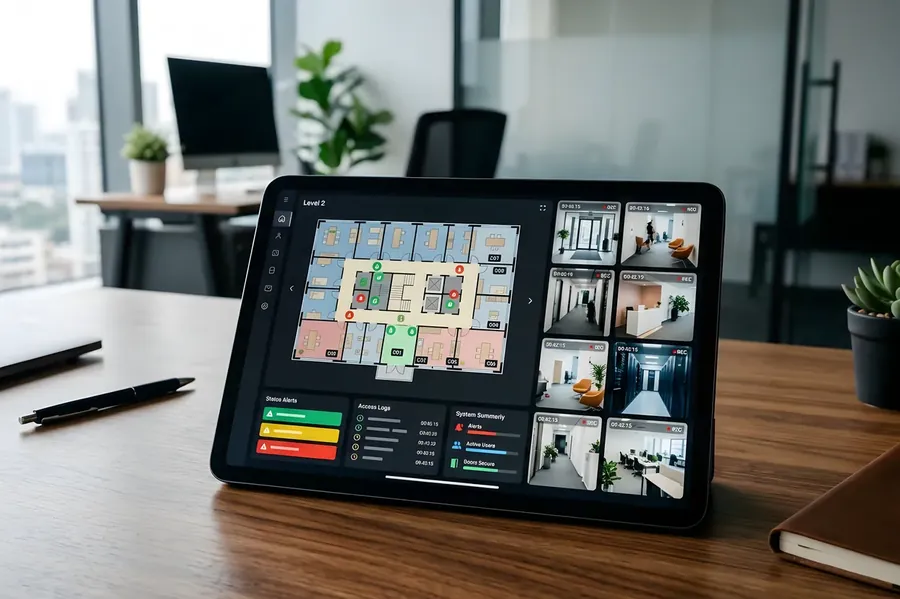
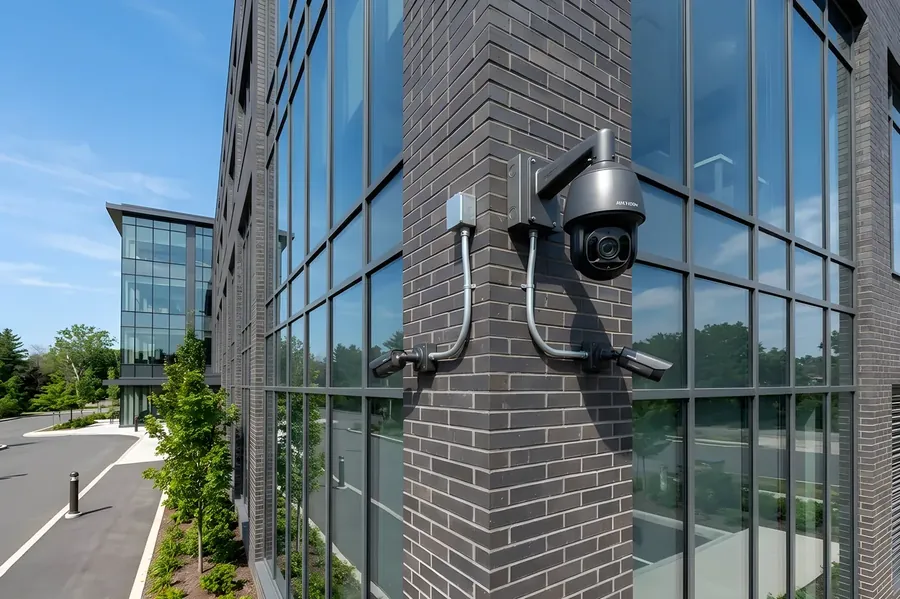
Commercial buildings only. If you manage a facility in McKinney, oversee a tenant improvement in a flex building along SH 121, or develop commercial property in Collin County’s fastest-growing industrial submarket, that is the work I do. My scope covers access control, video surveillance, intrusion detection, and visitor management, with fire alarm and life safety design running alongside security on every project that requires it.

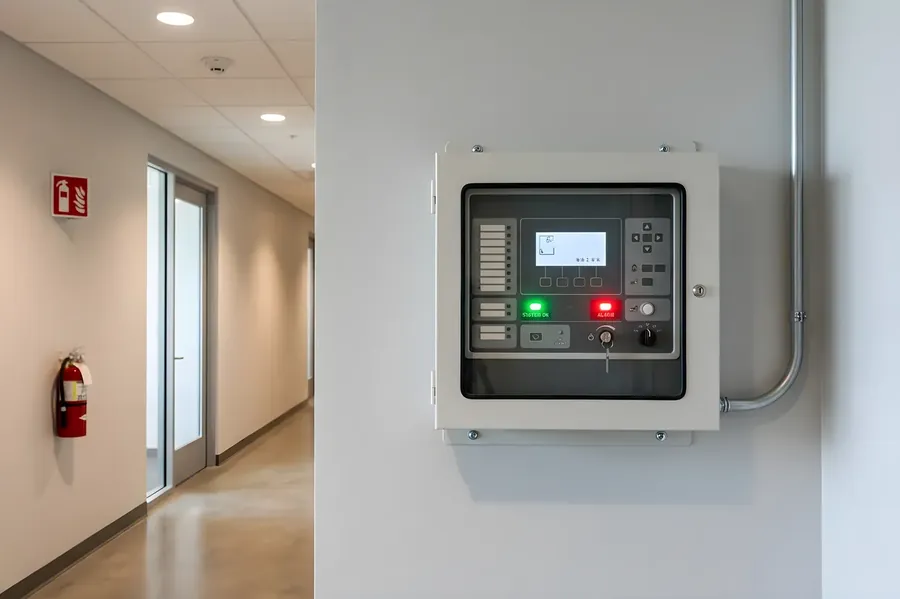
McKinney adopted the 2024 International Fire Code via Ordinance 2025-08-066, effective October 1, 2025, and any fire alarm construction permit submitted to the McKinney Fire Department Fire Marshal’s Office after that date must comply with the current cycle, not the prior edition. I have spent 17 years in commercial security, including nine years running service delivery for more than 350 commercial customers before moving into sales. I have been on the side of the desk that takes the call when a certificate of occupancy is delayed and a lease clock is running, and I scope to prevent those surprises.

McKinney Is an Industrial Growth Market With a Retrofit Core

McKinney’s commercial growth runs on a different track than the corporate-campus new construction that defines Frisco to the west. The dominant construction context here is industrial, flex distribution, and mixed-use along the SH 121 corridor and the McKinney National Airport area. VanTrust Real Estate’s 121 Commerce Park on SH 121 is adding 761,000 square feet of industrial space, with Phase 1 construction underway as of Q2 2026. CapRock Partners is developing the McKinney Air Business Park, approximately 250,000 square feet of Class A industrial adjacent to McKinney National Airport, which is itself in the middle of a $79 million terminal expansion with commercial service expected to begin in late 2026. These are not tenant build-outs in finished office towers. They are industrial shells converting to occupied space, and every one of them generates its own security system design and fire alarm permit scope.

McKinney also has something Frisco does not: more than 100 older commercial storefronts in the historic downtown square, built in the 19th and early 20th centuries. Retrofitting access control systems and commercial fire alarm into buildings that were never designed for them is a different scope than greenfield construction. The structural conditions, the existing wiring, and the historic preservation context all affect what a system design can look like. I have coordinated security and fire alarm scopes for commercial builds across DFW’s industrial and flex submarkets, and the downtown retrofit work is a genuine part of what McKinney’s commercial building stock requires.

The practical implication for property managers and GC project managers: industrial shell-to-TI fits, multi-tenant flex buildings, and mixed-use projects like District 121 at SH 121 and Alma Road generate security and fire alarm permit cycles that must be sequenced correctly. A brief note on AHJ jurisdiction: most commercial addresses inside McKinney city limits fall under the McKinney Fire Department Fire Marshal’s Office and the 2024 IFC. Addresses just past the city boundary can sit in unincorporated Collin County, where a different AHJ and an older code edition apply. I verify AHJ before scoping any McKinney commercial project.

Two Permits, Two City Departments: What Every McKinney Commercial Operator Needs to Know

Commercial properties in McKinney require two separate permits: a fire alarm construction permit from the McKinney Fire Marshal’s Office before installation begins, and an alarm user permit from the McKinney Police Department at $100 per year, obtained before the system goes live. Understanding which permit comes from which office, and in what order, is what keeps a commercial project on schedule.

The Fire Alarm Construction Permit (McKinney Fire Marshal’s Office)

The McKinney Fire Department’s Fire Marshal’s Office is the AHJ for commercial fire alarm systems in the city. Before installation begins on any new commercial build or tenant improvement, plans must be submitted electronically through the Citizen Self-Service (CSS) Portal. The McKinney Fire Marshal’s Office does not accept paper submittals.

A Commercial Building Permit number (COM#) is required before the Fire Marshal’s Office will begin reviewing fire alarm plans. Submittals without a COM# are not processed. Plans must include a wet APS signature and stamp (or a licensed Fire Protection Engineer seal) and must comply with the 2024 IFC and the current published NFPA 72 standard.

McKinney has a sequencing requirement that directly affects project schedules: fire alarm plans are not reviewed until after the sprinkler permit has been issued. These two permit tracks run sequentially in McKinney, not in parallel. A delay in sprinkler permitting cascades immediately to fire alarm plan review, which then cascades to the acceptance test.

After installation, the McKinney Fire Marshal’s Office conducts the acceptance test. The system must pass before the city issues a certificate of occupancy (CO). A failed acceptance test delays the CO, and the lease clock on tenant space keeps running regardless.

The Alarm User Permit (McKinney Police Department)

The second permit is entirely separate. Any commercial property operating a monitored alarm system designed to summon emergency response must hold an alarm user permit from the McKinney Police Department. The annual fee is $100 for commercial properties. This permit must be obtained before the system is activated, not after a post-activation grace window.

McKinney requires the alarm user permit in hand before the system goes live. Operating a commercial alarm system without a valid permit is a separate offense for each day the violation continues, with fines up to $500 per day per Ordinance 2018-03-024. Permits are valid for 12 months and must be renewed annually through the city’s alarm portal.

Multi-Tenant Buildings: Who Holds Which Permit

In McKinney’s industrial and flex stock, tenant improvement scenarios are frequent: an existing building with a permitted fire alarm system receives a new tenant with a separately monitored security system. Any monitored alarm system that dispatches police requires a valid alarm user permit, and a tenant activation is the moment to confirm how that requirement applies to the new system.

The fire alarm construction permit for a project is tied to the building’s COM# and is typically associated with the permit holder for that scope of work. For the alarm user permit, building owners and property managers should verify permit requirements directly with the MPD Alarm Unit at the time of system activation. For commercial property managers and building owners overseeing multi-tenant portfolios, the permit structure is one part of a broader compliance picture that spans fire alarm coordination, access control, and monitored systems at each suite.
The 2024 IFC Adoption: What McKinney’s New Fire Code Means for Your Project

McKinney adopted the 2024 International Fire Code with local amendments via Ordinance 2025-08-066, effective October 1, 2025. Any fire alarm construction permit submitted on or after that date is reviewed under the 2024 IFC. The prior edition is no longer the governing standard for new McKinney submittals.

The practical implication for projects in progress: drawings scoped before October 2025 may reference the prior code cycle. Those drawings need to be updated to the 2024 IFC before submittal to the McKinney Fire Marshal’s Office, or they will generate review comments and add time to the plan review process. I design to the 2024 IFC and do not submit current McKinney permits on outdated templates.

One boundary note: properties in unincorporated Collin County immediately outside McKinney city limits fall under the Collin County Fire Marshal’s Office, which enforces the 2021 IFC, one edition behind McKinney’s current standard. If a project address is near the city boundary, confirming the correct AHJ before submitting plans prevents sending drawings to the wrong jurisdiction entirely.

Frequently Asked Questions: Commercial Security and Fire Alarm in McKinney

Schedule a Conversation About Your McKinney Project

Commercial buildings in McKinney only. If you are managing a build-out, coordinating a tenant improvement, or working through permit compliance for a McKinney commercial facility, a conversation costs nothing and gives you a clear picture of the permit sequence, the fire code requirements, and what a properly scoped security system looks like for your building type.

I work with commercial clients in English and Spanish.

Call (469) 608-7798