Commercial Security Consulting in Plano

Security consulting for Plano commercial buildings: access control, video surveillance, fire and life safety, and permit coordination for corporate campuses and Class A office.

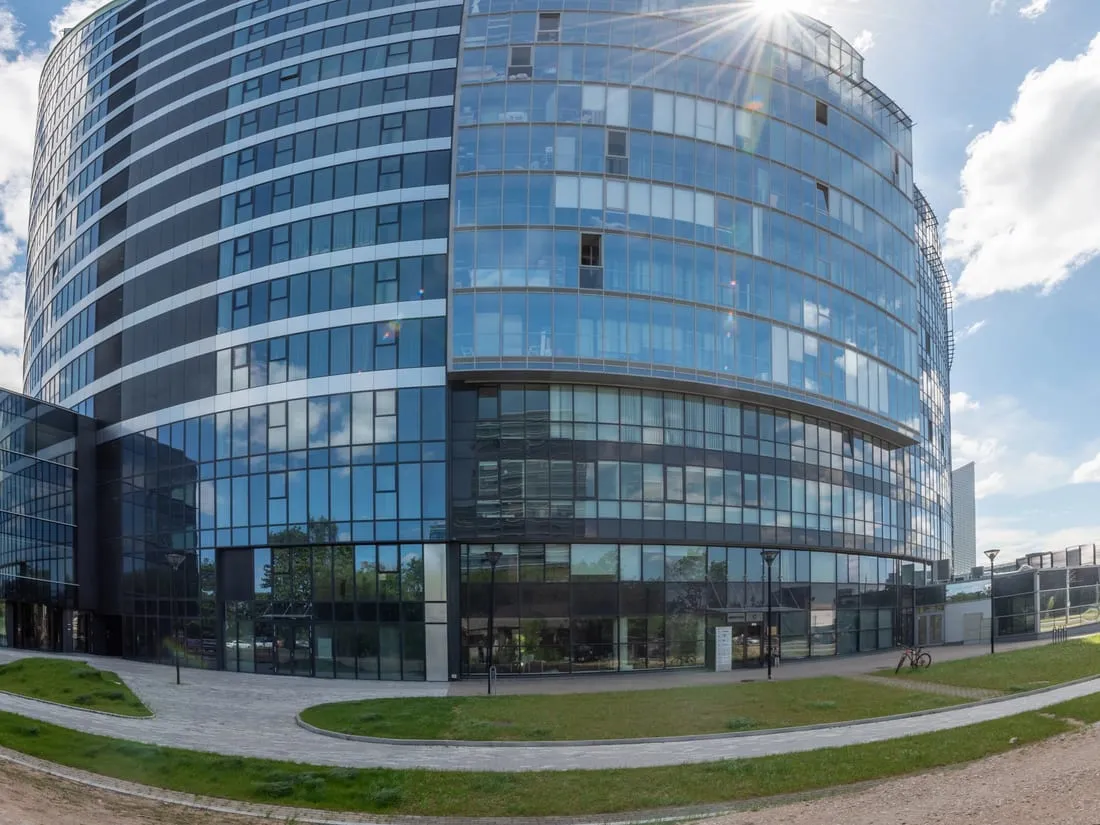
Modern Dallas-Fort Worth commercial office tower

What I Do for Commercial Buildings in Plano

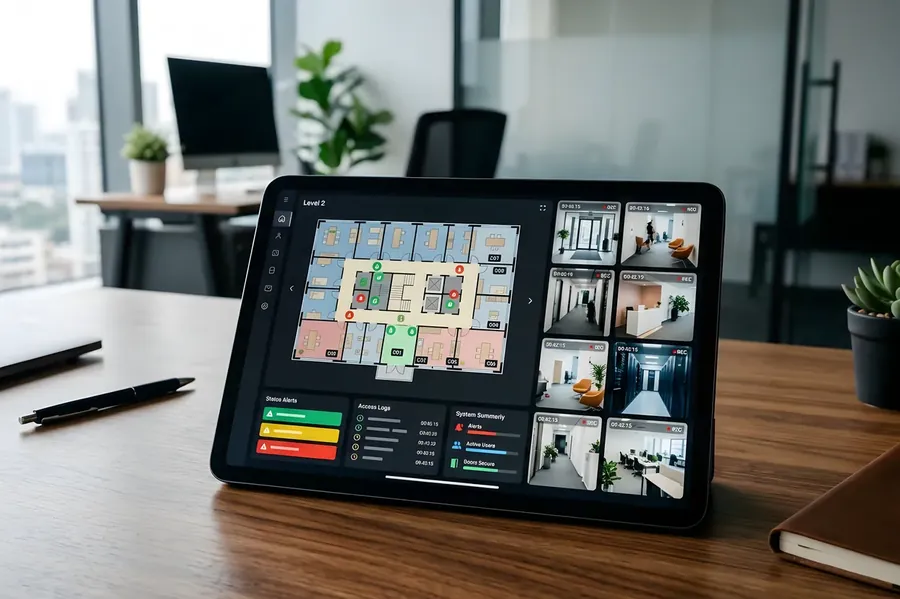
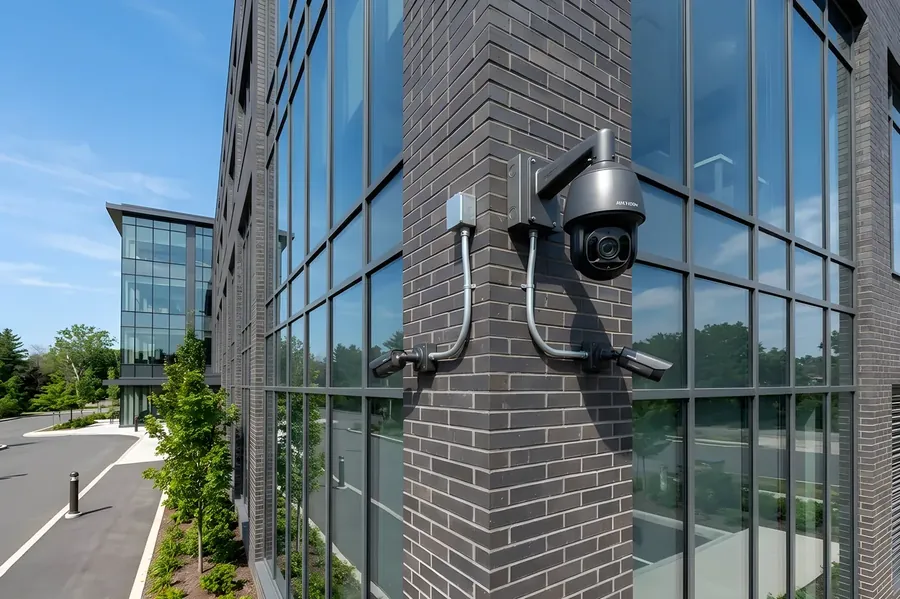
Commercial buildings only. If you manage a facility in the Legacy corridor, oversee a tenant improvement in a Granite Park Class A tower, or coordinate security and fire alarm scopes for a corporate campus along the Dallas North Tollway or SH 121 corridor, that is the work I do. My practice covers access control, video surveillance, intrusion detection, and visitor management, with fire alarm and life safety design as the second essential scope on every project that requires it.

Plano adopted the 2024 International Fire Code with local amendments via Ordinance 2025-6-2, effective August 1, 2025, which means any fire alarm construction permit submitted to Plano Fire-Rescue after that date must comply with the current cycle, not the prior edition. I have spent 17 years in commercial security, nine of them running service delivery for more than 350 commercial customers before moving into sales. I have been on the side of the desk that absorbs the consequences when a certificate of occupancy slips because a permit submittal was not right the first time, and in a market where corporate lease clocks run from a specific move-in date, that delay has a real dollar cost. I scope to prevent it.

Plano Is a Corporate-Campus Market With a Class A Core

Plano has already landed the corporate campuses that its neighbors to the north are still building toward. The Legacy corridor, anchored by the Dallas North Tollway and SH 121, hosts Toyota North America’s headquarters, Liberty Mutual’s two 19-story towers, and the regional campus of one of the nation’s largest banks. Granite Park signed two new headquarters tenants in 2025 alone. The multi-tenant buildings here demand credential hierarchies, elevator control integration, campus-scale visitor management, and fire alarm coordination to match.

The market is also moving into its next chapter. January 2026 brought the announcement of a $1.35 billion, two-million-square-foot global telecommunications headquarters campus at 5400 Legacy Drive, targeting partial occupancy in 2028. The Haggard Farm mixed-use project at Spring Creek Parkway and Parkwood Boulevard broke ground in December 2025, with approximately 650,000 square feet of office as part of its full buildout. A Legacy/Granite Park area master plan study commissioned in January 2026 signals the corridor is being actively repositioned, not just maintained.

There is also a retrofit dimension that sets Plano apart from either of its neighbors to the north. Assembly Park in east Plano turned a former mall site into roughly 180,000 square feet of Class A office, with three tenants added through 2025. The US 75 corridor carries 1980s and 1990s office stock where access control upgrades and fire alarm replacements ride along with nearly every significant tenant improvement, and retrofitting buildings designed for a different era takes different planning than new construction.

Facilities directors in Legacy West answer to national corporate real estate teams with institutional-quality compliance expectations, and NFPA 72-compliant fire alarm scopes here span successive tenant improvement cycles. Most commercial addresses inside Plano city limits fall under Plano Fire-Rescue and the 2024 IFC. Properties just outside city limits in unincorporated Collin County fall under the Collin County Fire Marshal, which enforces the 2021 IFC, one edition behind Plano’s current code.

Two Permits, Two City Departments: What Every Plano Commercial Operator Needs to Know

Commercial properties in Plano require two separate permits: a fire alarm construction permit from Plano Fire-Rescue’s Fire Marshal’s Office before installation begins, and an alarm user permit from the Plano Police Department Alarm Unit, obtained before the system goes live. Conflating them creates scheduling problems: each comes from a different department, covers a different stage of the project, and carries its own consequences.

The Fire Alarm Construction Permit (Plano Fire-Rescue Fire Marshal’s Office)

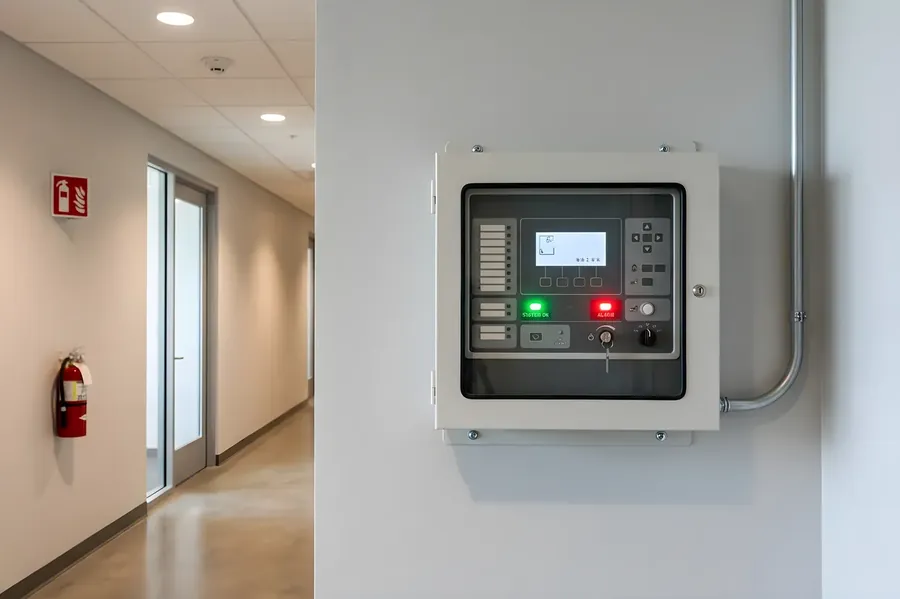
Plano Fire-Rescue’s Fire Marshal’s Office is the Authority Having Jurisdiction for commercial fire alarm systems in Plano. The Fire Marshal’s Office operates within the Fire Prevention section of Plano Fire-Rescue’s Support Services bureau. Every commercial fire alarm project, whether new construction or a tenant improvement, requires a construction permit from this office before installation begins.

Plans go in electronically through the city’s plan submittal portal; paper submittals are not accepted for commercial fire protection review. Plano Fire-Rescue publishes a dedicated Fire Alarm and Central Station Monitoring submittal guide, separate from the general building package. A TSFMO-licensed contractor stamp and signature or a licensed Fire Protection Engineer seal is required, along with state license copies and the commercial building permit number.

After installation comes the acceptance test, standard practice under the adopted fire code, and occupancy approval rides on a passing result. A failed or delayed acceptance test holds up occupancy, and in Plano’s active multi-tenant leasing environment, the lease clock does not pause while the test is rescheduled.

The Alarm User Permit (Plano Police Department Alarm Unit)

The second permit is entirely separate and is often the one that catches commercial operators off guard. Any commercial property operating a monitored alarm system designed to summon police or fire response must hold an alarm user permit from the Plano Police Department. Registration and renewal go through the city’s alarm portal at alarms.plano.gov.

Plano Police and Fire respond to approximately 12,000 false alarms per year, and the city runs a dedicated False Alarm Reduction Program because that volume is a real enforcement priority. Operating a commercial system without a valid permit is an ordinance violation, not an administrative gap. Penalty amounts are published in the city’s alarm ordinance; I direct buyers there rather than citing figures that may have changed.

Multi-Tenant Buildings: Who Holds Which Permit

In new construction, the developer or building owner typically holds the fire alarm construction permit for the base building system. In tenant improvement work, the tenant or their contractor generally pulls the permit for the scope within their space, because the permit ties to the building permit for that specific project. For alarm user permits, any separately monitored system that can summon emergency response requires its own registration. How that plays out between a tenant’s suite alarm and a building-wide central system depends on the specific monitoring arrangement, and the moment of tenant activation is the right time to confirm it.

This split is common in Plano’s Class A multi-tenant buildings, and the exact permit structure for any given activation should be verified with the Plano Police Department Alarm Unit. For commercial property managers overseeing multi-tenant portfolios, the permit question is one piece of a broader compliance picture that includes fire alarm coordination, access control, and monitored systems across multiple suites and tenant cycles.
The 2024 IFC in Plano: What Changed and Why It Matters Now

Plano adopted the 2024 International Fire Code with local amendments via Ordinance 2025-6-2, effective August 1, 2025. That ordinance repealed the prior 2021 IFC adoption outright; the city’s adopted-codes page lists the full 2024 suite. Any fire alarm construction permit submitted to Plano Fire-Rescue on or after August 1, 2025 must comply with the 2024 IFC, not the prior cycle.

The practical implication for projects in progress: drawings scoped or prepared before August 2025 may reference the old code edition. Those drawings need to reflect the 2024 IFC before submittal to the Fire Marshal’s Office, or they will generate review comments and extend the plan review timeline. I design to the current 2024 IFC and do not bring drawings to Plano plan review that are calibrated to a repealed edition.

One code-boundary distinction that matters for addresses near the city edge: commercial properties in unincorporated Collin County outside Plano’s boundaries answer to the Collin County Fire Marshal’s Office rather than Plano Fire-Rescue. That jurisdiction has not moved to the 2024 edition; the Collin County Fire Marshal enforces the 2021 IFC as of mid-2026, placing it one full code cycle behind the city standard.

Frequently Asked Questions: Commercial Security and Fire Alarm in Plano

Schedule a Conversation About Your Plano Project

Commercial buildings in Plano only. If you are coordinating a build-out, managing a tenant improvement cycle, or working through permit compliance for a corporate campus or Class A office project, a conversation gives you a clear picture of the permit sequence, the code requirements, and what a properly scoped security system looks like for your building type, with no obligation.

I work with commercial clients in English and Spanish.

Call (469) 608-7798