Two Permits, Two City Departments: What Every Frisco Commercial Operator Needs to Know
Commercial security and fire alarm work in Frisco requires two separate permits, administered by two different city departments. Conflating them creates schedule problems.
The Fire Alarm Construction Permit (Fire Prevention Office)
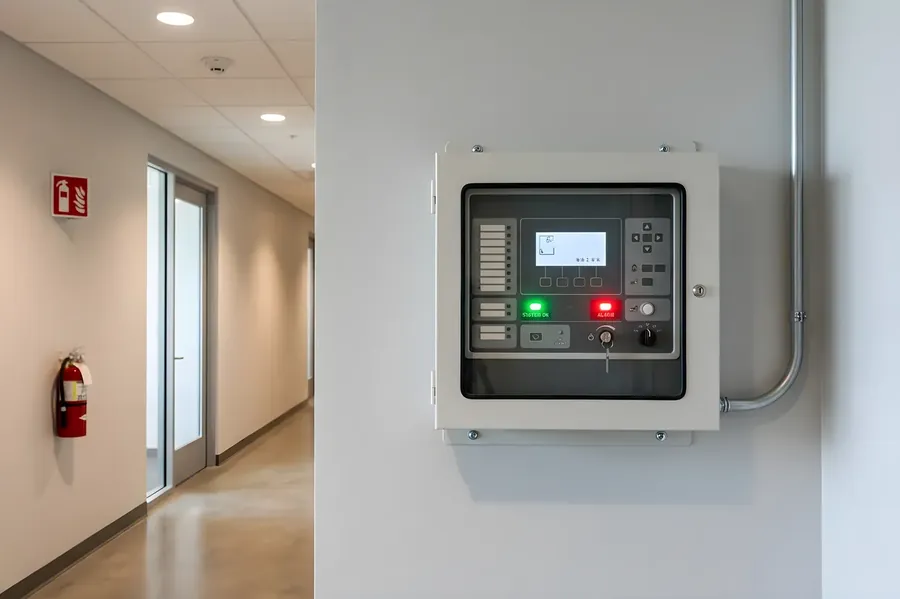
The Frisco Fire Prevention Office (also the Fire Marshal’s Office) is the AHJ for fire alarm systems in the city. Before installation on any new commercial build or tenant improvement begins, plans are submitted electronically through the city’s Electronic Plan Review (EPR) system. That submission must show device layout, circuit configuration, equipment specifications, and compliance with both NFPA 72 and the 2024 IFC.
The Fire Prevention Office reviews plans for code compliance. A complete, correctly formatted submission reduces comment cycles; an incomplete submission returns for corrections and adds weeks to a project timeline.
After the system is installed, the Fire Prevention Office conducts the acceptance test. That acceptance test sits on the critical path to the certificate of occupancy (CO): a failed first inspection delays the CO, and the lease clock on tenant space keeps running. I have coordinated permit submissions and acceptance test scheduling for commercial build-outs in DFW’s highest-growth submarkets, including projects where rescheduling a failed test cost a tenant thousands in holding costs.
The Alarm User Permit (Police Records Division)
Once a monitored system is operational, any commercial property whose alarm is designed to summon emergency services must register an alarm user permit with the Frisco Police Records Division within 30 days of activation. That covers burglar, panic, and robbery alarms as well as monitored fire alarm systems, including those connected to a UL-listed central station. This permit is separate from the construction permit and is administered by a different city department entirely.
Operating without an alarm permit carries a $250 penalty, plus a citation that can reach $500 per day. False alarm fees for fire alarms run on a rolling 12-month basis: the first two are free, and each one after that costs $75.
Multi-Tenant Buildings: Who Holds Which Permit
In a multi-tenant commercial building, the building manager typically holds the alarm permit for the building’s fire alarm system. Each commercial tenant is responsible for a separate alarm user permit for any additional alarm (burglar, panic, or robbery) within their suite, within 30 days of activation.
This distinction catches property managers off guard more than any other part of the Frisco permit structure. If a tenant activates a new alarm without registering within the 30-day window, that tenant faces the fines, not the building owner. For commercial property managers and building owners overseeing multi-tenant portfolios in Frisco, the permit structure is one part of a broader compliance picture that spans security scope, access control, and common-area surveillance.